



Eight Great Tips for Optimum Nutrition


Eight Great Tips for Optimum Nutrition
balanced-nutrition

1st- Water

Drink at least 8 glasses (2 liters) of water, diluted juices, and herbal or fruit teas each day. Aim to reduce, or avoid, your intake of coffee and tea, to at least 2 per day, as they dehydrate the body.

2nd- Fresh Fruits & vigatables

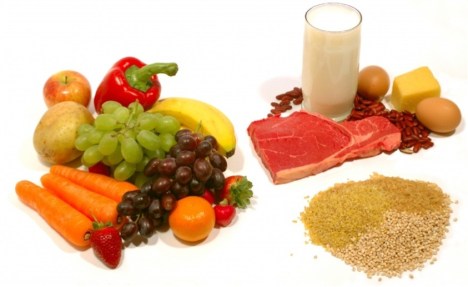
Increase your intake of fresh fruit to a minimum of 3 portions per day (dark berries, apples, bananas, citrus fruit), and dark green leafy vegetables (kale, spinach, watercress, peas, broccoli) to at least 5 per day.

3rd- Oily Fish

Increase oily fish (e.g. salmon, mackerel, sardines, trout) to 3 times per week, or ground seeds (pumpkin, sesame, sunflower and linseed) -1 tablespoon per day- in order to maintain healthy levels of omega 3 and omega 6.

4th- Protein

Eat good quality protein everyday for example organic chicken, eggs, fish, lentils, chickpeas beans, seed, and nuts.

5th- Bad Fats

Decrease wherever possible, your intake of bad fats (hydrogenated or trans fatty acids). These are found in most margarines, ready-made meals, biscuits, and cakes.

6th- Fried Food

Avoid burnt and fried foods as these are highly toxic to the body and are carcinogenic.

7th- Refined Carbohydrates

Avoid processed and refined carbohydrates such as white bread and rice, cakes, and biscuits. Replace these with whole wheat and whole grain food e.g. oats, rye, barley, and spelt products.

8th- No Alcohol, No Smoking

stop your alcohol intake for ever, Also cut back or stop smoking.

Reference: the institute for optimum nutrition, www.ion.ac.uk

Chicken Waste


Chicken waste “makes cheap, food-friendly biofuel”

Wagdy Sawahel

12 August 2009 | EN

chicken_Flickr_hddod

Waste from chicken farming provides a cheap source of biodiesel Flickr/hddod Waste from chicken farming could provide an unlikely source of biodiesel now that an environmentally friendly process to produce good-quality fuel from it has proved successful.

Chicken-feather meal is a by-product of large-scale poultry production. It often includes blood and offal, and contains about 11 per cent fat.

Unlike conventional biofuel sources such as sugar cane or corn, it is not in demand for human food but it is used as animal feed because of its high protein content and fertiliser for its high nitrogen content.

Researchers boiled the feather meal to extract the fat and then processed the fat into biodiesel using potassium hydroxide as a catalyst. The process produces 7–11 per cent biodiesel of good quality, comparable to biodiesels from soybean and palm oil.

Susanta Mohapatra, co-author of the study and a researcher at the University of Nevada in Reno, United States, told SciDev.Net: “This process is very economical and does not use expensive or toxic chemicals. It will benefit both developed and developing countries.”

Mohapatra says that in countries where there are large poultry farms, implementation of the process is feasible within a year or two.

“To implement this technology in developing countries [where there are few large poultry farms] you may need an additional step to collect the poultry waste. If this can be done by a company and/or by government regulations, this technology will have a huge immediate impact on their economy.”

The researchers are developing a production process that could reduce the price of the feather-meal biodiesel still further, Mohapatra added. He estimates that the manufacturing cost should be around US$0.26 per litre(US$1 per gallon ) for an average-capacity biodiesel plant, making itcheaper than soy biodiesel, for example, which costs US$1.85–2.11 per litre (US$7–8 per gallon).

The study was published in the Journal of Agricultural and Food Chemistry last month (22 July).

Link to full article in Journal of Agricultural and Food Chemistry

Probiotics & Obesity


microbiology

Probiotics and obesity: a link?

Didier Raoult

Abstract

Didier Raoult cautions that the use of probiotics as growth promoters in the farming industry means that further studies should be carried out before they are regarded as safe for use in humans.

Recent studies on the human gut microbiota have shown that obesity is associated with a reduction in Gram-negative bacteria, specifically members of the Bacteroidetes, and an increase in Gram-positive Firmicutes. Additionally, it has been shown that the gut microbiota of obese individuals is less diverse than that of non-obese individual. The manipulation of the gut microbiota — through the administration of probiotics and antibiotics — has been used for growth promotion in farm animals for 50 years and is regulated by the Food and Drug Administration (FDA) in the United States and by the European Commission in Europe. The probiotics used for this purpose in the farming industry include products containing Firmicutes, in particular Lactobacillus spp., Bifidobacterium spp. and Enterococcus spp. These products have been marketed and used in most of the animal farming industry, including in the production of poultry, calves and pigs, and many studies have shown increases in the size and weight of the young animals that are given these bacterial additives. Antibiotics have also been used for this purpose, although this practice is now banned in Europe.

Firmicutes are also used directly as therapeutic adjuvants in humans, under the names probiotics, prebiotics or, more generally, ‘functional foods‘. In the United States, these products are categorized by the FDA as ‘generally regarded as safe’ (GRAS; ironically, ‘gras’ translates as ‘fat’ in French). Analysis of these products showed that they contain high concentrations of live Lactobacillus spp. and Bifidobacterium spp. (up to 108organisms per gram or millilitre). These concentrations are similar to those used in animals as growth promoters. In the United States, probiotic-containing products such as dairy drinks or yogurts typically contain >107lactobacilli. Lactobacillus acidophilus is found in functional foods in amounts that are equivalent to those used to cause weight gain in piglets. Lactobacillus spp. have also been associated with weight gain in children treated for diarrhoea. In addition, some studies have demonstrated weight increases in children who received Lactobacillus rhamnosus, independent of the disease for which this probiotic was prescribed. When these data are considered in the context of the epidemic of childhood obesity that is occurring in many developed countries, it seems essential to quickly and more completely study the effects of probiotics in the paediatric population.

Functional foods, including fermented dairy products containing probiotics, are gaining popularity in many countries, among children in particular, but little research has been carried out on the connection between these products and weight gain. These food products are often sold under the guise of having positive effects on children’s health, but there are little conclusive data to support these claims. Surprisingly, the level of regulation for the use of probiotics in humans is less strict than that for their use in animals. The specific bacterial species involved and the concentrations at which they are present are often not made clear to consumers, and to my knowledge the long-term effects of probiotics as human food supplements or as adjunctive therapy have never been rigorously evaluated. In my opinion, further work using experimental models should be carried out to evaluate the role of these products as animal growth promoters before they are recommended for use in children.

…further work using experimental models should be carried out to evaluate the role of these products as animal growth promoters before they are recommended for use in children.

It is my view that there is a danger that we may be causing a real human health problem by promoting for human consumption products containing bacteria that have been associated with weight gain in the animal food industry. Any chemical compound with such a side effect in experimental animals would be rigorously tested before being allowed to be used in food. I think that before probiotic and prebiotic products can be regarded as safe, it is imperative that they are tested in experimental models that evaluate the propensity of these products to cause obesity in humans.


Related to: Nature Reviews Microbiology 7, 616 (September 2009) |doi:10.1038/nrmicro2209